
Photovoltaic mounting systems in 2025: the current market, innovation and the importance of quality
The market for mounting systems is evolving rapidly. Here’s what you need to know and how SigueSol stays one step ahead.
As large-scale solar power expands rapidly across Europe, the demands are becoming ever greater. Larger modules, more extreme weather conditions, cost pressures and higher performance expectations: choosing the right partner is no longer just a technical matter; it is a genuine strategic challenge.
To gain a better understanding of the sector’s dynamics, we spoke to Angelo Nogara, Country Manager Italy at SigueSol, who shares his insights into the market and the developments currently reshaping the industry.

A market under pressure, caught between strong demand and inconsistent quality
The European solar market is experiencing sustained growth, particularly in highly dynamic markets such as Italy. This acceleration is automatically leading to an increase in demand for mounting structures, which is sometimes outstripping supply capacity. At the same time, new manufacturers are entering the market. Their presence helps to increase available volumes, but it also raises a major issue: that of consistent quality.
As Angelo Nogara points out:
« The rapid emergence of new players helps meet demand for volume, but it also carries risks: price volatility and inconsistent quality. Today, proven engineering and reliable manufacturing are becoming key differentiators. »
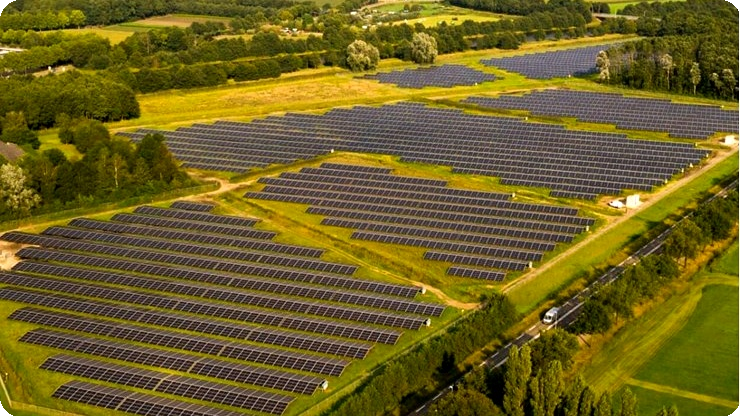
This observation is all the more significant given that mounting systems now account for a significant proportion of the total cost of large ground-mounted power stations, representing up to 25% of CAPEX. With rising steel and aluminium prices, stricter load standards and evolving module designs, this proportion remains a key economic driver. In other words, the choice of a high-performance structure directly influences the overall profitability of the project.
Larger modules, greater stresses
The photovoltaic sector is entering a new phase. Modules are becoming larger, heavier and more challenging to install. At the same time, extreme weather events such as strong winds, heatwaves and more frequent storms are placing greater strain on structures. In response to these developments, the most robust manufacturers have adapted their solutions: reinforced structural designs, improved corrosion protection, updated load calculations and optimisation of long-term performance.
However, not all players adhere to the same standards.
“Some companies continue to prioritise a price-driven strategy at the expense of structural resilience,” warns Angelo Nogara. “The limitations of these choices often become apparent as soon as the installations are exposed to extreme weather conditions.”
In this context, quality is no longer just a ‘bonus’: it has become an essential requirement for ensuring the longevity of assets and protecting investments.
Innovation is transforming structures… and the way things are done
Innovation in assembly systems is not just about materials or mechanical strength. It also concerns the way projects are designed and how new applications are supported.
In terms of structure, the market is moving towards solutions that are more robust, lighter and quicker to install. Modular designs are gaining ground, as they simplify on-site deployment and better accommodate site-specific constraints. Agrivoltaics perfectly illustrates this trend. These projects require specific structures, with elevated systems, appropriate spacing and configurations compatible with agricultural activity. In this field, SigueSol has developed practical expertise, built on field experience and a detailed understanding of the real needs of farmers and developers.
At the same time, digitalisation is also accelerating. Smart monitoring platforms, predictive maintenance and automated safety features such as weather-dependent shutdown strategies make installations more resilient and easier to manage at scale.
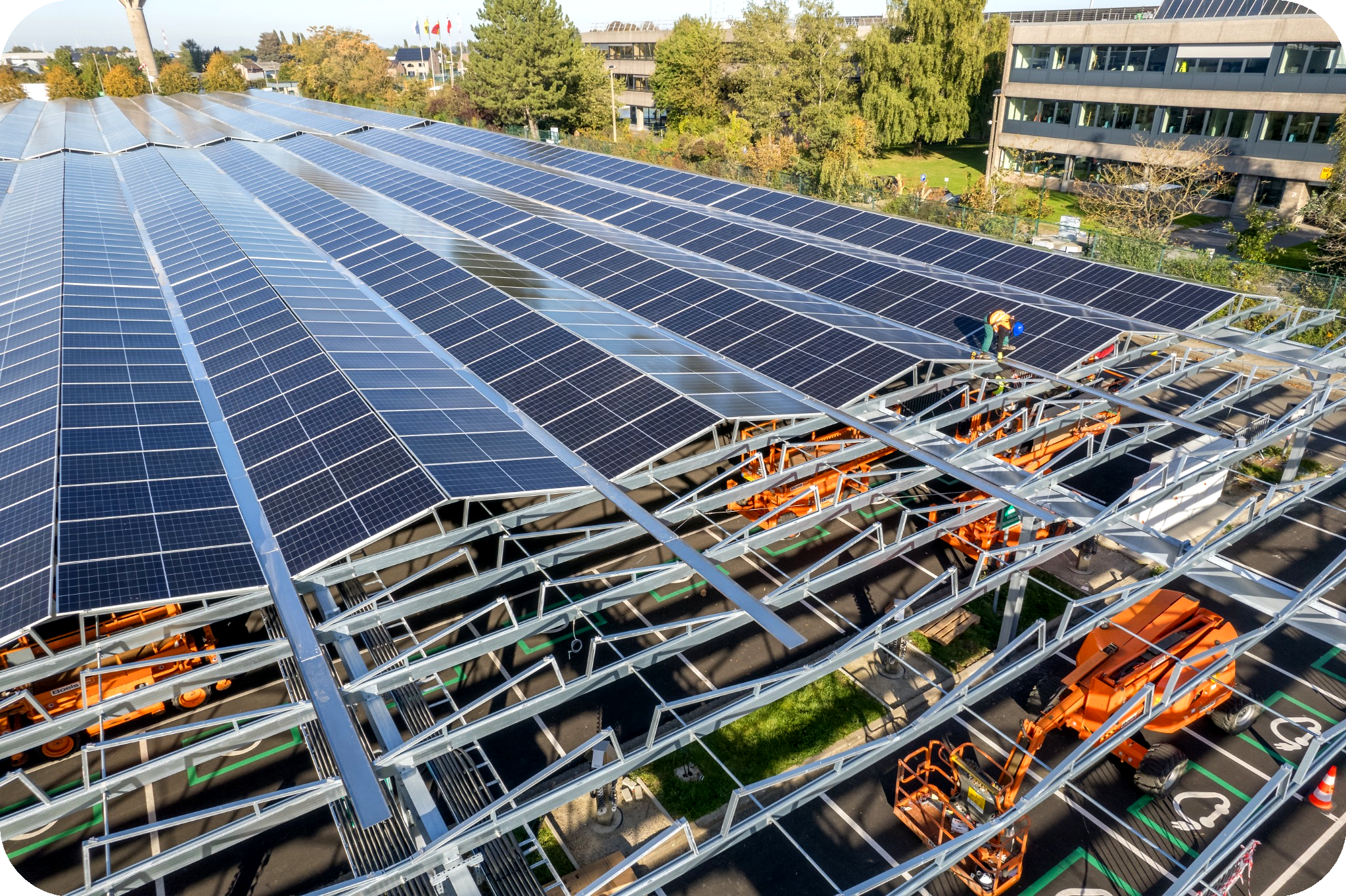
Solar carports are also emerging as a solution with significant potential. They make use of existing spaces, prevent the development of new land, and align perfectly with companies’ ESG objectives. When combined with electric vehicle charging, battery storage and smart energy management, they become a powerful tool for transformation across commercial, industrial and logistics sites.
.png)
The true cost of a system is not measured solely by its purchase price
In recent years, several Asian manufacturers have established themselves on the European market with highly competitive offerings. Some have managed to grow and adapt; others have disappeared as quickly as they arrived. On the ground, feedback now makes it easier to distinguish sustainable solutions from those that are merely attractive in the short term.
According to Angelo Nogara, the sticking points are often the same: inadequate customer service, limited understanding of local constraints, insufficient technical support and inconsistent product quality.
“Several customers have expressed their dissatisfaction: poor customer service, a lack of understanding of local requirements and substandard quality,” he explains. “Customers who focus solely on price often end up with a higher overall cost over the system’s lifetime.”
From a long-term investment perspective, the key indicator is therefore not the immediate purchase cost, but rather the total cost of ownership, the reliability of delivery, and the partner’s ability to support the project at every stage.
SigueSol’s response: performance, flexibility and a long-term vision
In this increasingly demanding environment, SigueSol adopts a clear approach: innovation, quality and flexibility. The company supports a wide range of projects, including complex sites, challenging terrain and bespoke structures for transport hubs and bus depots. Each solution is designed to ensure maximum structural strength, reliable execution and durability suited to long-term challenges.
The range of products and services continues to expand. Ground-mounted systems, trackers and agrivoltaic solutions are based on technology that has been tried and tested for over a decade. At the same time, SigueSol also caters to smaller-scale projects, which are often underserved by the market, with modular turnkey solutions such as OneMega and Energy Hub. These offerings integrate photovoltaics, battery storage, electric vehicle charging and smart energy management into a simplified, coherent and user-focused approach.
With manufacturing in Italy and a network of carefully selected European partners, SigueSol offers bespoke support, ranging from simple supply to complete turnkey solutions. Whether for 100 kW projects or industrial-scale developments, our aim remains the same: to provide reliable, high-performance structures built to last.
So what now?
“The market is moving towards greater specialisation and data-driven performance,” explains Angelo Nogara. “In the agrivoltaic sector, we anticipate major innovations in monitoring and control. Quality, local support and performance throughout the entire lifecycle will increasingly influence purchasing decisions.”
In a market where speed, trust and clarity matter more than ever, only suppliers who combine genuine technical expertise with responsive local support will be able to establish a lasting presence.